What arm speed means in bowling
Bowlers often use “arm speed” to describe the pace of the whole delivery. The bowling arm’s movement matters, but the ball is released after an approach and a coordinated delivery stride. Trying to separate the arm from everything that happens before it can make practice less useful.
Video appearance is also different from measurement. Camera angle, playback speed and where the arm starts moving can change how fast a delivery looks. Judge an intervention using normal bowling with the same ball and measurement setup, while checking accuracy and repeatability.
Research in elite male bowlers associates release speed with several technique features together, including arm timing. It does not assign a universal percentage of speed to the arm alone. [1]
Choose the first thing to review
Start with an observation from normal bowling. The most useful next step depends on what is changing.
If your approach changes
Record a few normal deliveries and note your starting routine. Discuss the run-up and arrival at the crease before adding a new arm-only instruction.
If you feel rushed at release
Ask your coach to review the approach and delivery stride together. Choose one priority, then compare normal deliveries again to see whether it helps.
If gym gains are not carrying over
Review physical training alongside bowling skill, fatigue and comparable speed measurements. A stronger exercise result does not automatically produce a faster delivery. The gym-training guide explains how to check that transfer.
If you need a clearer pace plan
Begin with normal bowling under consistent conditions and record your target outcomes. Use that baseline to agree a priority with your coach.
Three useful coaching tasks
Controlled walk-through. Rehearse the delivery sequence at a comfortable pace in a clear space. Notice whether the movement remains connected and the finish is balanced. Return gradually to normal bowling. The purpose is awareness, not forcing a new release position.
Short-approach target bowling. Use an approach agreed with your coach and a realistic line-and-length task. Keep one cue. If the shorter approach makes you pull harder with the arm or lose balance, change the task instead of pushing through it.
Same-angle video comparison. Record normal bowling before and after one cue. Compare the complete delivery, not the most dramatic frame. Note whether the change improves the task you chose and whether it remains usable at your normal approach.
None of these tasks requires you to throw the arm violently, ignore your landing or chase a fixed speed gain. Count any deliveries within your planned session.
Prepare the shoulder without forcing range
A preparation routine should help you move comfortably into bowling. Tell your coach about pain, previous shoulder problems or movements that feel restricted. A public article cannot determine which stretch or loading exercise is right for you.
Research has found associations between joint range of motion and bowling technique. It does not prove that every bowler needs more shoulder flexibility, or that a particular stretch will increase pace. [2]
Do not force the arms behind your body to achieve someone else’s range. Resistance exercises should use a controllable load and appropriate supervision. If a movement hurts, stop and seek assessment rather than treating pain as evidence that the exercise is working.
Be careful with modified-ball shortcuts
You may see heavier balls, lighter balls, resistance bands and rapid throwing routines promoted as universal arm-speed fixes. Changing equipment changes the task. Releasing a lighter object faster does not, by itself, show a lasting improvement with your match ball.
This guide does not prescribe ball weights or overspeed programmes. Their suitability depends on the player, their age, preparation, current workload and the supervision available. Young bowlers should not copy a specialist adult routine from a video.
Start with normal bowling and a clear coaching question. Specialised equipment should follow a reasoned assessment, rather than replace one.
Watch the coaching explanation
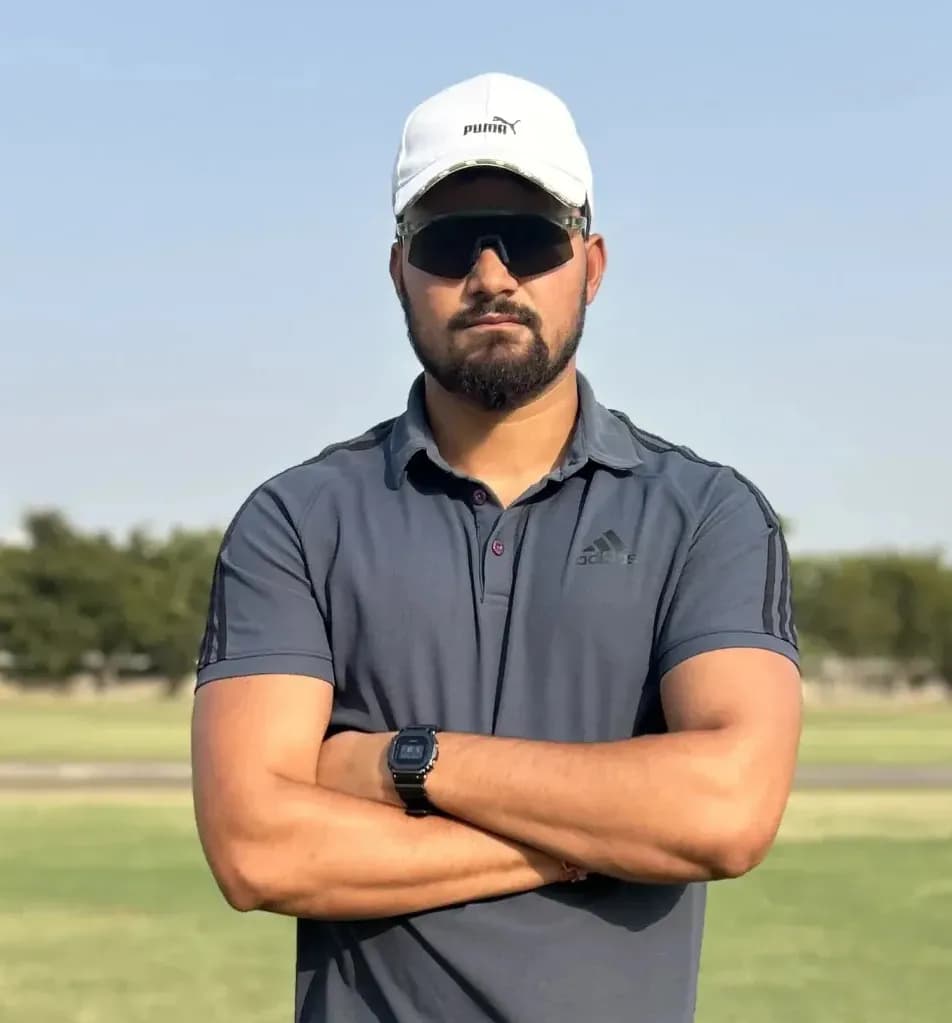
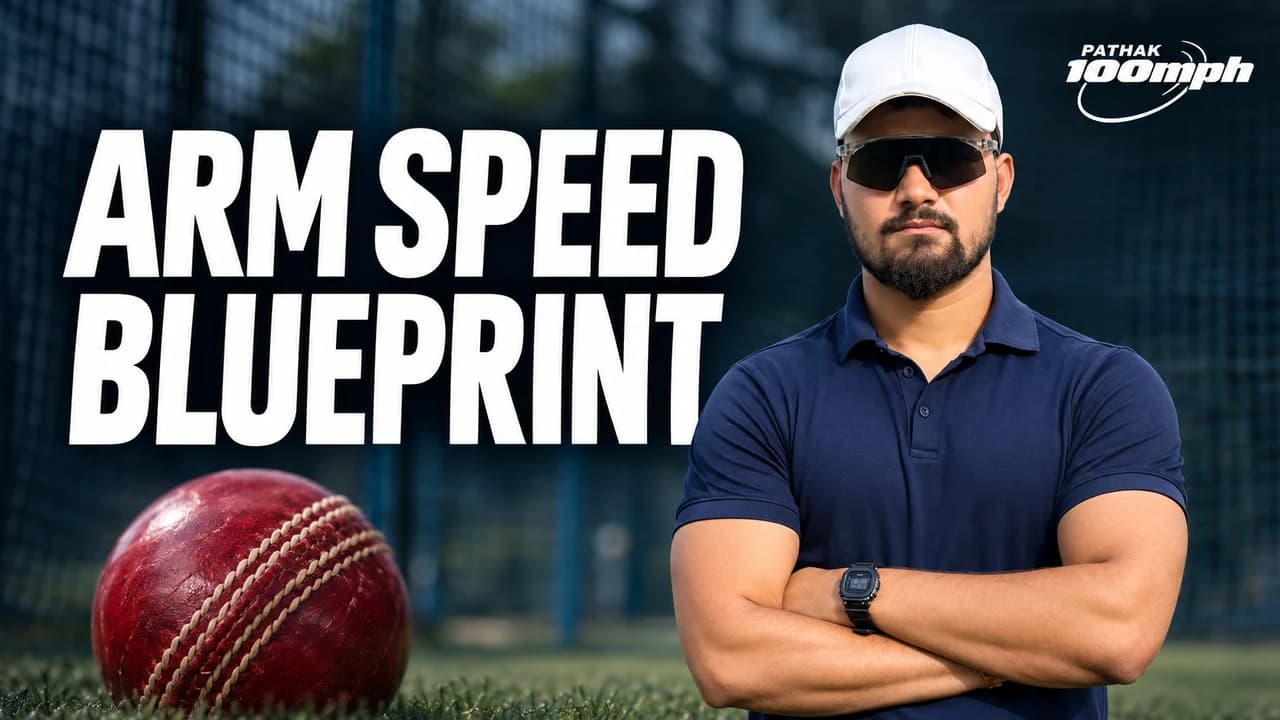
Coach Ankit Pathak discusses arm-speed training in the academy’s original video. Use the updated written guidance on this page alongside it, particularly when considering shoulder work or changes of equipment.
Watch Coach Ankit Pathak
Watch the original video on YouTube ↗
Review what changed
After an agreed training period, compare like-for-like normal bowling. Record pace if you have a consistent measurement setup, the intended line and length, and how repeatable the action feels. Discuss whether the same change is useful during a spell rather than on one ball.
If the arm looks quicker but measured pace and control have not improved, that is useful feedback. Review the approach, sequence, workload and task with your coach. The next step is a better question, not automatically a harder drill.
For a broader pace plan, read how to increase bowling s